Makhana vs Lotus Seeds vs Fox Nuts: What's the Difference?
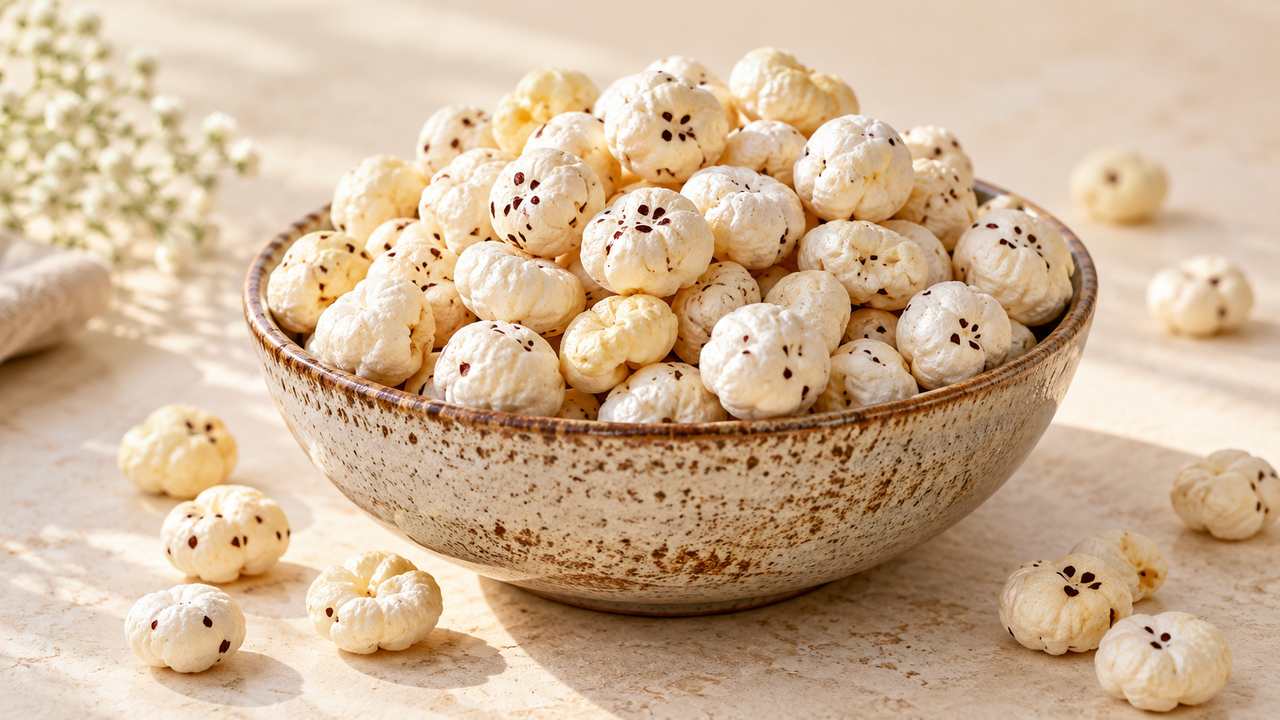
Ask five people what makhana is and you will hear five names: makhana, phool makhana, fox nut, fox nuts, lotus seeds. Suppliers use them interchangeably, buyers get confused, and export paperwork demands precision. This guide settles the terminology so you always know what you are buying.
The short answer
Makhana, phool makhana and fox nut are the same product. All three names refer to the popped kernel of the seed of Euryale ferox, a water plant grown in Bihar. "Lotus seeds" is where the confusion starts, because true lotus seeds come from a different plant.
Term by term
Makhana
The common Indian name for the popped, edible kernel. In trade it usually means the graded, polished white kernel ready for packing, roasting or export.
Phool makhana
Literally "flower makhana". The traditional name emphasising the popped, flower-like kernel. In wholesale listings it means the same graded product as makhana.
Fox nut / fox nuts
The standard English trade name, used in export documentation, international listings and B2B platforms. If you are exporting, "fox nuts" is the name on your invoice, packing list and APEDA paperwork.
Gorgon nut
An older English name for the same seed, rarely used in current trade but still seen in some botanical references.
Lotus seeds: the confusing one
True lotus seeds come from Nelumbo nucifera, the sacred lotus, a different plant from Euryale ferox. Lotus seeds are smaller, denser, usually sold dried or as a paste ingredient, and are a different commodity with different pricing. Many Indian sellers loosely call makhana "lotus seeds", which is technically wrong and can cause problems in export documentation and buyer expectations.
Why the distinction matters in wholesale
- Export paperwork: customs and APEDA documentation should say fox nuts (Euryale ferox). Writing "lotus seeds" can misclassify the shipment.
- Buyer expectations: an overseas buyer ordering "lotus seeds" may expect the Nelumbo product. Confirm the botanical name on every export order.
- Price comparisons: makhana and true lotus seeds trade at different prices. Comparing a makhana quote against a lotus-seed quote is meaningless.
- Domestic listings: on IndiaMART and TradeIndia, listings under all these names usually mean makhana, but check the product photos and description before assuming.
What to ask your supplier
Three questions remove all ambiguity: "Is this Euryale ferox?", "What sutta grade is the lot?", and "Can I see a 100 g sample?" The botanical name settles the product, the grade settles the price, and the sample settles the quality. Any supplier who hesitates on the first question is not someone to buy export grades from.
Private-label buyers should add a fourth question: "Will the pack carry the botanical name?" Retail packs sold online increasingly list "fox nuts (Euryale ferox)" in the ingredients, and getting this right on the first print run saves a costly reprint later. Exporters should also confirm the HS code with their CHA, since makhana and true lotus seeds can fall under different classifications depending on the destination market.
Worked example: decoding a supplier listing
Imagine a listing that reads: "Premium Phool Makhana, 5 Sutta, Fox Nuts Wholesale, Bihar origin, Rs. 950/kg." Here is what each part tells you. "Phool makhana" and "fox nuts" are the same product, so the seller is stacking keywords, not selling two things. "5 sutta" pins the grade at roughly 14 to 16 mm, which should match the indicative October 2026 band of Rs. 850 to 1,050 per kg. "Bihar origin" is expected for genuine makhana, but for a premium claim you would ask for the district. "Rs. 950/kg" sits inside the band, so the price is plausible. What is missing? The whole-kernel percentage, the moisture level, and whether the price is ex-mandi or delivered. Those three answers, plus a 100 g sample, turn a listing into a buying decision. Listings that show stock photos instead of the actual lot deserve the same caution: always judge the sample in your hand, not the image on the screen.
Quick reference
| Name | Plant | What it is |
|---|---|---|
| Makhana / phool makhana | Euryale ferox | Popped kernel, the standard product |
| Fox nut / fox nuts | Euryale ferox | English trade name, used in exports |
| Gorgon nut | Euryale ferox | Older English name, rarely used |
| Lotus seeds (true) | Nelumbo nucifera | Different product, different pricing |
Frequently Asked Questions
Are makhana and fox nuts the same thing?
Yes. Makhana, phool makhana and fox nut are all names for the popped kernel of Euryale ferox seed grown in Bihar. Fox nut is the standard English trade name used in exports.
Are makhana and lotus seeds the same?
No. True lotus seeds come from Nelumbo nucifera, a different plant, and are a different commodity with different pricing. Many sellers loosely call makhana lotus seeds, which causes confusion in export orders.
What is phool makhana?
Phool makhana means flower makhana, the traditional name for the popped kernel. In wholesale listings it is the same graded product as makhana, and suppliers often stack both names purely for search visibility.
What name should I use on export documents?
Use fox nuts with the botanical name Euryale ferox on invoices, packing lists and APEDA paperwork. Avoid lotus seeds on export documents to prevent misclassification. Confirm the HS code with your CHA as well, since a wrong product name on the shipping bill can delay clearance at the destination port.
What is gorgon nut?
Gorgon nut is an older English name for the Euryale ferox seed, the same product as makhana. It is rarely used in current trade. You may still see it in old botanical references and a few legacy listings, but modern wholesale and export trade universally uses makhana or fox nuts.
Related guides
- Makhana Grades Explained: The Sutta Size Chart (3 to 7 Suta)
- How to Start a Makhana Business in India: Investment, Margins & Models
- Makhana Business Profit Margin: Wholesale vs Retail (2026)
Get today's wholesale price
Grades 3–7 sutta · MOQ 25 kg per grade · pan-India dispatch.